Vaping has become increasingly common across Aotearoa, particularly among young people and those using it as an alternative to smoking. While vaping is often promoted as a safer option than smoking cigarettes, it is important to understand that vaping can still have significant effects on your oral health.
Many people are surprised to learn that vaping can contribute to problems affecting the teeth, gums, mouth and overall oral health.
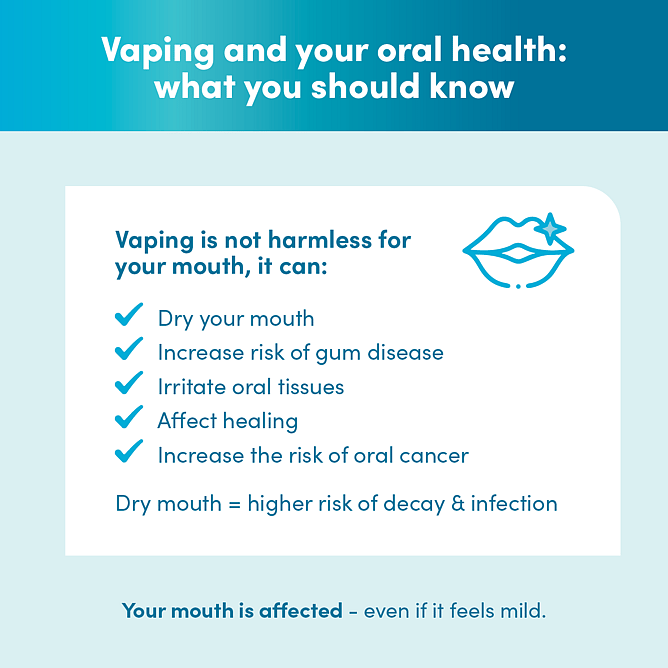
How vaping affects your mouth
Vaping liquids often contain nicotine, flavouring chemicals and other substances that can affect the tissues inside the mouth.
Some of the most common oral health concerns linked to vaping include:
Dry mouth
Gum inflammation and gum disease
Increased plaque build-up
Bad breath
Tooth decay
Mouth irritation or ulcers
Teeth grinding and jaw tension linked to nicotine use
Nicotine can also reduce blood flow to the gums, making it harder for the body to fight infection and heal properly.
Dry mouth and tooth decay
One of the most common side effects of vaping is dry mouth.
Saliva plays an important role in protecting your teeth by washing away food particles, neutralising acids and helping repair early tooth damage. When your mouth becomes dry, the risk of tooth decay and gum disease increases.
Many vaping products are also flavoured and sweetened, which may contribute to acid exposure and increased risk of decay over time.
Vaping and gum disease
Research continues to grow around the connection between vaping and gum disease.
The chemicals and nicotine in vaping products may irritate gum tissue and contribute to inflammation. Some people who vape may notice:
Bleeding gums
Swollen gums
Gum sensitivity
Receding gums
Because nicotine can restrict blood flow, gum disease may sometimes progress without obvious signs early on.

Vaping: a growing oral health concern
Vaping has increased significantly in New Zealand over the past decade, particularly among young people.
While smoking rates have continued to decline, vaping has become increasingly common among both teenagers and adults. This trend is concerning because many people are unaware of the potential impacts vaping can have on oral health and overall wellbeing.
As vaping becomes more widespread, oral health professionals are seeing growing numbers of patients with vaping-related oral health concerns and are playing an important role in supporting prevention, education and early intervention.
Protecting your oral health
If you vape, there are steps you can take to help reduce the impact on your oral health:
Brush twice daily with fluoride toothpaste
Clean between your teeth daily
Drink plenty of water to help manage dry mouth
Limit sugary drinks and snacks
Attend regular oral health appointments
Seek support if you would like help to stop vaping or smoking
Regular oral health visits are important for identifying problems early and preventing more serious issues developing.
The bottom line
While vaping may be different from smoking, it is not risk-free for your oral health.
Understanding the potential effects of vaping can help you make informed decisions and take steps to protect your teeth, gums and overall wellbeing.