Most people know that smoking affects the lungs and heart, but many do not realise the significant impact it can have on oral health.
Smoking is one of the major risk factors for gum disease and can affect the health of your gums, teeth and mouth in ways that are not always immediately obvious.
What is gum disease?
Gum disease is an infection and inflammation of the tissues that support your teeth.
It is usually caused by plaque, a sticky layer of bacteria that builds up on the teeth and gums. Without regular brushing, cleaning between the teeth, and professional removal of plaque, stains and tartar, gum disease can develop over time.
Early gum disease may cause:
Red or swollen gums
Bleeding when brushing or flossing
Bad breath
If left untreated, more advanced gum disease can lead to:
Gum recession
Loose teeth
Bone loss around the teeth
Tooth loss
How smoking affects your gums
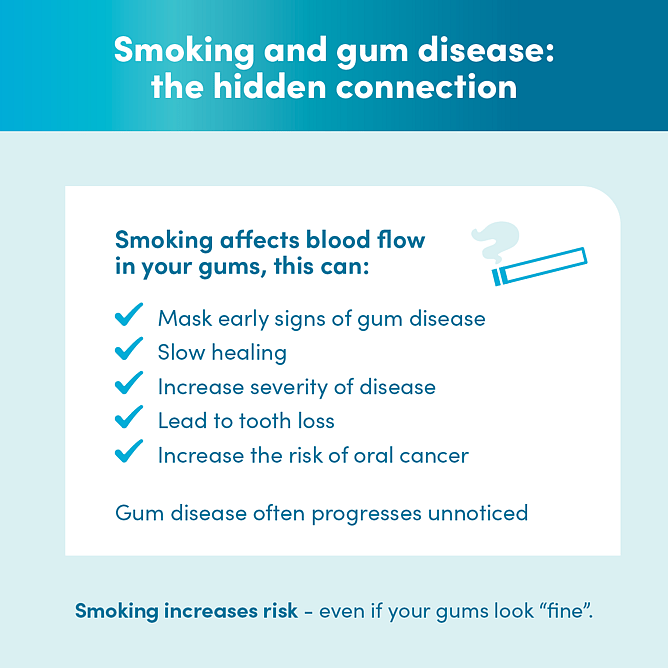
Smoking affects the body’s ability to fight infection and heal properly.
Chemicals in tobacco can reduce blood flow to the gums, making it harder for the body to respond to inflammation and infection. This increases the risk of gum disease progressing more quickly.
Smoking can also:
Increase plaque and tartar build-up
Slow healing after dental treatment
Reduce the success of gum disease treatment
Mask the early warning signs of gum disease
Why gum disease can go unnoticed
One of the hidden dangers of smoking is that it can reduce bleeding from the gums.
While bleeding gums are often an early sign of gum disease, smokers may have less noticeable bleeding because blood flow to the gums is reduced. This means gum disease can sometimes become advanced before symptoms are recognised.
Smoking and tooth loss
People who smoke are significantly more likely to experience severe gum disease and tooth loss compared with non-smokers.
The longer and more frequently someone smokes, the greater the risk to their oral health.
Beyond gum disease
Smoking affects more than just your gums.
It can also increase the risk of:
Delayed healing following dental treatment or oral surgery
Oral infections
Staining of the teeth
Persistent bad breath
Oral cancer
These effects can impact both oral health and overall quality of life.
Can quitting help?
Yes. Stopping smoking can have significant benefits for your oral health and overall wellbeing.
After quitting, the gums often heal better, inflammation may reduce, and the risk of ongoing damage decreases over time.
If you would like support to quit smoking, free help is available through Quitline. Visit quit.org.nz or call Quitline on 0800 778 778 for information, advice and support.
It is never too late to improve your oral health.
Protecting your oral health
To help reduce the risk of gum disease:
Brush twice daily with fluoride toothpaste
Clean between your teeth every day
Attend regular oral health appointments
Seek support to stop smoking if needed
Oral health professionals can help identify early signs of gum disease and provide advice tailored to your needs.
The bottom line
Smoking and gum disease are closely connected, even when the warning signs are not obvious.
Understanding the risks and seeking support early can help protect your gums, teeth and long-term oral health.